
Yunnan culture + cuisine · Shao Bruce · March 25, 2026
A complete guide
to mixian.
At Yunnan By Potomac, mixian is the center of gravity on the menu. This full-length guide restores the restaurant’s original article inside the new site, with its structure and practical detail intact.
What is mixian?
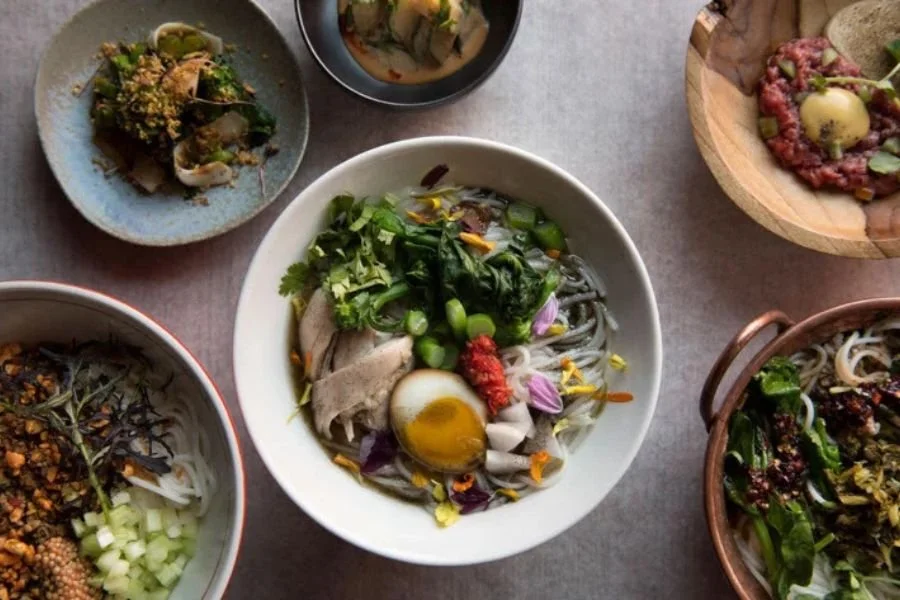
Mixian is a type of rice noodle associated with Yunnan Province, China. The noodles are commonly distinguished by their round shape, moderate thickness, and smooth texture. They are often served with broths and sauces, where their mild flavor gives the surrounding ingredients room to lead.
At the table, mixian is not treated as a side dish. A bowl can be the meal itself, shaped by its broth or sauce, vegetables, herbs, pickles, protein, and condiments.
Crossing the Bridge
One of the best-known names connected with mixian is Guoqiao Mixian, often translated as Crossing the Bridge Noodles. The original restaurant article shared the familiar story used to explain that name and its connection to a hot-broth preparation.
That story is preserved here as context, not presented as settled history. Its exact origin, dating, and heritage status require qualified cultural review before launch. What matters for a diner is the form of the dish: hot broth and noodles brought together with an assortment of ingredients, creating a meal that unfolds at the table.
What makes mixian different?
For a guest familiar with wheat noodles or very thin rice vermicelli, mixian offers a different shape and eating experience. Its round, moderately thick profile is designed to remain present alongside broth, sauce, and toppings rather than disappear beneath them.
Texture and preparation can vary. The original article described both softer, thicker noodles and thinner, firmer styles. The restaurant’s current public menu is the right place to confirm which bowls and preparations are available now.
How is mixian eaten?
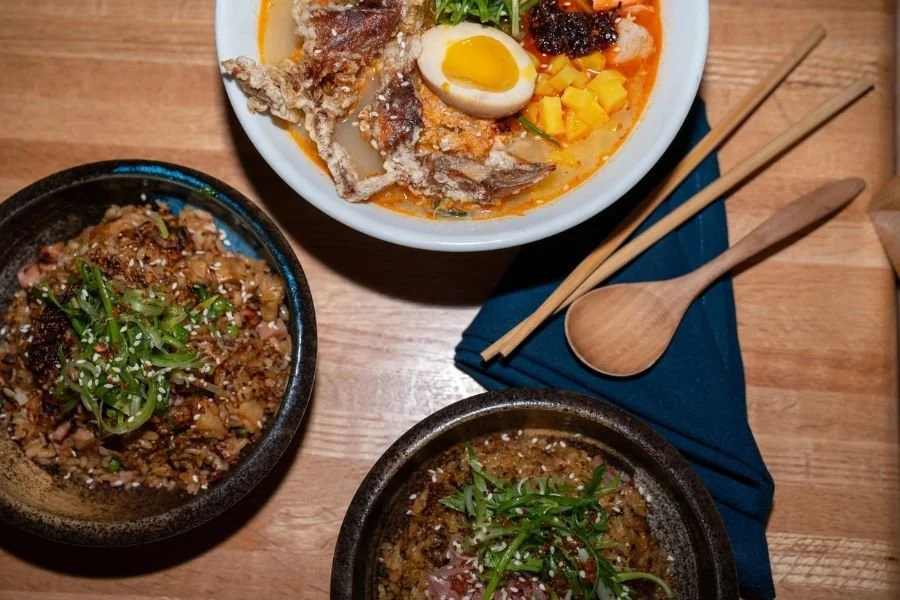
Mixian can appear in broth, with sauce, chilled, or stir-fried. A broth-based bowl may bring together noodles, vegetables, mushrooms, herbs, pickles, meats, seafood, tofu, and condiments. Different combinations change the bowl’s temperature, richness, aroma, and texture.
Crossing the Bridge-style service is often described as a sequence: a very hot broth, fresh noodles, and an assortment of ingredients are brought together at the table. Exact ingredients and service vary, so guests should treat the restaurant’s current menu and staff guidance as authoritative.
Mixian at Yunnan By Potomac
Yunnan By Potomac’s mission calls mixian the “soul food of Yunnan” and places mixian bowls at the core of its menu. The broader table adds xiaochi small plates, bao, jiaozi dumplings, shaokao barbecue, larger plates, and sweets.
The public menu has included bowls ranging from Little Pot and Grandma Parou to Mogu Shiitake and Braised Beef Lu, along with Liang Mixian Salad. The restaurant’s first-party archive also presents Norwegian King Crab Mixian as a signature expression of its contemporary approach.
How should a first-time guest choose?
Begin with temperature. Decide whether you want a warm broth, a chilled preparation, or another style shown on the current menu. Then think about richness, protein, vegetables, herbs, and how much heat you want around the noodle.
If a name is unfamiliar, use the description as a starting point and ask the team how the bowl is served. Ingredients, availability, price, modifiers, and dietary or allergy suitability must always be confirmed with the current menu and restaurant staff.